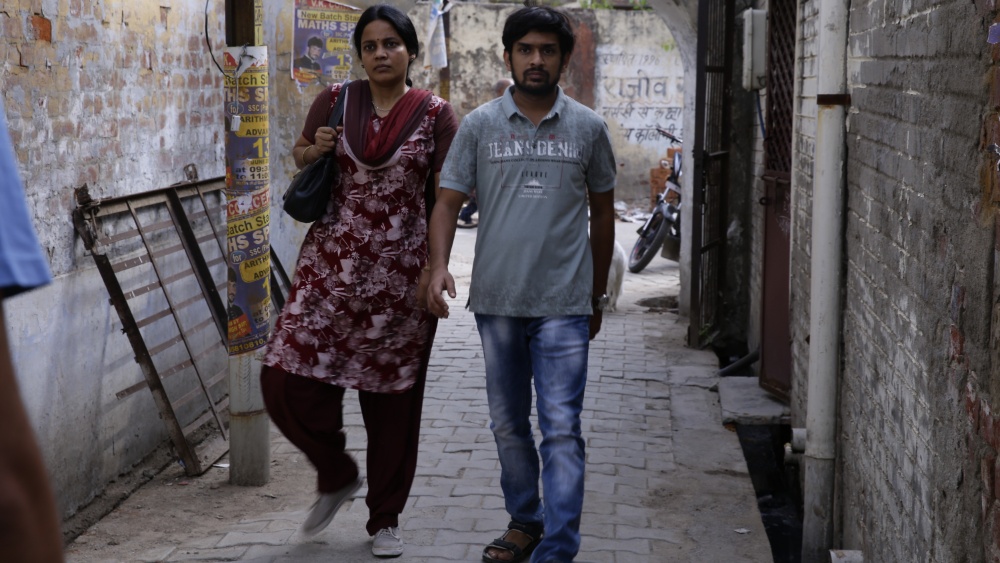
Indian filmmaker Kanu Behl is developing “Loving Anais,” a star-crossed romance set between India and France, as his follow-up to Cannes Directors’ Fortnight title “Agra,” which opens theatrically in India.
“It’s kind of like star-crossed romance mixed in with noir,” Behl tells Variety. “It’s essentially about an Indian guy who goes looking for someone from Gurgaon to Bordeaux, and in his search for that someone, life takes a different turn, and he falls in love with someone else, but they don’t speak each other’s language.”
The project, currently heading toward first draft, has secured CNC Development Fund support. William Jehannin (“Agra”) is producing.
Behl’s sexually charged drama “Agra” will receive a limited theatrical release in India via distributor Mantra Luminosity, marking a significant milestone for the director who has long hoped to reach local audiences.
The film follows Guru, a young single call center employee who still lives with his parents. Consumed by frustration, he plunges into a fever bordering on insanity, between pathetic fantasies, dating apps and hysterical self-harm. The film also explores the role property can play in a young man’s emancipation.
Debutant Mohit Agarwal stars as Guru, with Priyanka Bose, Ruhani Sharma, Vibha Chibber, Sonal Jha and Aanchal Goswami in pivotal roles. Rahul Roy, known for his romantic lead roles in 1990s films including blockbuster “Aashiqui,” plays Guru’s father.
“Making a film for independent filmmakers is not really about going to a festival,” Behl, whose debut feature “Titli” bowed at Cannes’ Un Certain Regard strand, says. “We wanted our own Indian audiences to see the film. Finally, my happiest moment is, however small the release is, however limited the marketing is, it’s out there in the world for an Indian audience to see, because really it’s an Indian story.”
The film will launch with a platform release strategy across 100 screens and approximately 150 shows, with plans to expand in subsequent weeks based on audience response.
Behl expresses frustration with the infantilization of Indian audiences by mainstream cinema. “Ninety-five to 96% of the stuff we see on Indian screens… is just Disneyfied, third class, fourth class, third grader, fourth grader, kids friendly content,” he says. “I have a deep faith that people want to see more complex content. They are actually now more starved than ever before.”
For “Agra,” Behl is aiming to reach beyond converted arthouse audiences. “Our whole attempt with ‘Agra’ has been to try a more organic, ground up approach, rather than a top down approach,” he explains. “Even if it’s slightly inauthentic to the film, to broad base, because you’re fighting competition that is grabbing eyeballs at a different rate.”
“What I’m trying with ‘Agra,’ knowing the kind of film it is, is to even lose authenticity, maybe to 5 or 10% but try to fight the bigger monster in a slightly more guerrilla and different way,” he adds.
The film explores themes of sexual repression, desire and transactionality in contemporary India. “It’s a film that functions in the margins between sexuality, sexual repression, the idea of spaces, how sexuality affects the spaces that we live in, and how the spaces in turn affect our sexual lives,” Behl says.
He believes audiences who give the film a chance will find it resonates deeply. “The people that are inhabiting the film are pretty much a mirror to who we are now,” he says. “I think for people who might not conventionally be interested in a film like this, it’s an opportunity to feel again and to reach that point that we used to know, that state of slightly enhanced existence.“
“Agra” releases in cinemas across India Nov. 14.
